A Bill to Prohibit Changes to SC Monuments

Steve Nuzum • March 22, 2026

"Heritage" and History.

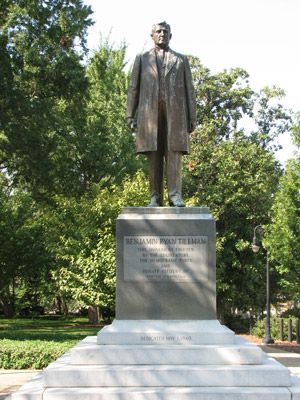
A statue of

Content warning: violent and racist language. 


Ben Tillman, before he was governor of South Carolina, was a member of the white supremacist, paramilitary "Red Shirts" (a successor to the Ku Klux Klan after the Klan was criminalized). During the Hamburg Massacre, Tillman participated in the murder of Black militia members, including six men the Red Shirts disarmed and executed after the fighting was over. Tillman proudly bragged about his involvement in the massacre for years.  According to Historic Columbia, "In a 1909 speech at the Red Shirt Reunion in Anderson, SC, Tillman boasted about his role in the 1876 murder of six Black militia members, whom he called 'negro thugs'.”


Tillman continued to call for violence against Black South Carolinians throughout his political career, and during the Constitutional Convention of 1895, he successfully pushed for Jim Crow voter restrictions, including a poll tax, to make it harder for Black citizens to vote.


In the late 1890s, Tillman gave a speech in which he said, "We of the South have never recognized the right of the negro to govern white men, and we never will. We have never believed him to be the equal of the white man, and we will not submit to his gratifying his lust on our wives and daughters without lynching him."


When the state erected a monument to Tillman in 1940, the plaques at its base did not include of this information. One, reads, in full, "Loving them he was the friend and leader of the common people. He taught them their political power and made possible the education of their sons and daughters."


Without the context of Tillman's life and career, these words are meaningless.  With that context, a reasonable person could conclude that the state of South Carolina supports the view that "the common people" do not include Black citizens, that the "sons and daughters" who deserve education are the White sons and daughters.  They might conclude that the state believes Tillman's personal use of racist violence, or his repeated justifications and calls for racist violence while in office, are acceptable.


And while the so-called "Heritage Act" of 2000 already makes it difficult to remove or rededicate many monuments, a new bill making its way though the legislature would broaden the list of protected monuments and make it nearly impossible to even revise those monuments to add historical accuracy and context. During the most recent Finance Committee meeting to discuss the bill, Senator Tom Young asked (video here) if, for example, a monument to servicemembers already on the State House grounds could be updated to add the "US Space Force" in order to make the monument accurate. While sponsor Danny Verdin said he didn't believe the bill would prevent such updates-- if only by the state legislature-- it's current language plainly does.


Senate Bill 508 ("Monument and Memorial Protection") prohibits individuals, groups, and elected officials from making changes or updates to state monuments.  It even explicitly prohibits non-permanent, non-altering additions "including those accessible by a QR code or other similar barcode, that are related to the historical monument or memorial but are not original to the monument or memorial and are located anywhere on the property upon which the monument or memorial is located".  The bill also creates a "cause of action" that would make it much easier for individuals and groups to sue entities (like cities, counties, school districts) for alleged violations of the prohibitions against changing monuments, even where the suing parties haven't been harmed directly by the changes.


So while many defenders of state monuments often claim that those monuments represent "history," Senator Verdin probably put it more honestly when he indicated that when considering monuments, it is important to give "honor to whom honor is due" (video here). Building an impressive statue of a human being, dedicating a public building, or adding names to a monument indicate who we honor as a society. Anyone who has seen the massive monuments to former presidents on the National Mall in Washington, DC, can attest that there is rarely a whole lot of historical accuracy when we build a cathedral to a person or idea.


If the bill passes as currently written, Tillman's monument could not be updated to reflect the accurate history of his life, including his own public statements. And that means, essentially, that we are honoring a fantasy of who Tillman was, while also honoring the totality of his actions and beliefs, including his violent white supremacy. But perhaps, as James Baldwin wrote, "What passes for identity in America is a series of myths about one’s heroic ancestors."


Similarly, the bill would prohibit the statue to "father of modern gynecology" J. Marion Sims from being updated to include his experiments, which he conducted without anesthesia, on enslaved Black women.


It would even have presumably prohibited one of the few obvious updates that has been made to a State House monument-- the addition to Strom Thurmond's statue after the revelation that longtime segregationist Thurmond had impregnated a Black 15-year-old maid employed by his family when he was 22 years old.


The edition of Essie Mae Washington's name to the list of Thurmond's children represents a legitimate correction to the historical record, but as S. 508 demonstrates, for many state leaders the state's statues, monuments, and dedicated facilities are not about history, at all.  After all, a statue that cannot be updated to reflect our best understanding of history is not a historical document, it is a celebration of an individual or event. "Heritage" becomes a code-word for celebrating some groups-- such as famous historical slaveholders like Tillman and Sims, who inflicted violence on Black South Carolinians as part of the very enterprises that made them famous-- while excluding others.


South Carolinians do deserve truthful, accurate, and complete history.  They likely won't get it from the state's monuments, but if the state chooses not to allow even temporary additions to the context around these monuments, reasonable people will likely infer that they support the values embraced by the figures who are celebrated in those monuments. And those values, clearly, include white supremacy, racial segregation, and even racial hatred and violence.


It should also be noted that almost every monument to an individual on the State House grounds, and in many state-funded public areas, is a representation of a White man.  The one monument to non-White South Carolinians on the State House grounds is the African American history memorial; there are not monuments to the many famous Black South Carolinians on the grounds. 


It sends a strong message, in other words, that a grand statue to "Pitchfork" Ben Tillman crediting him with educating the "sons and daughters" of South Carolina, has stood in front of the State House for 86 years and in that time not one Black South Carolinian has been deemed worthy to have an individual monument.


It took until last year to announce plans to memorialize a Black South Carolinian at the State House: Robert Smalls, the first Black South Carolina House member, who actually authored the legislation that created South Carolina's free public system, the first of its kind in the country. In addition to whitewashing history, the long inclusion of Tillman and the exclusion of figures like Smalls has given ahistorical credit to a slave-owning white supremacist for the achievements of a Black formerly enslaved war hero and state legislator.


But putting up a single monument to Smalls, no matter how deserved, should not provide cover to the legislature for ingraining historically inaccurate monuments to white supremacy further into our public spaces. As Senator Derrell Jackson told Verdin (video here), "Senator, I would just remind you what a wise man once told me: What one generation honors, another generation may not feel like it is worthy of the same honor."


S. 508 received a favorable report from the Finance Committee, sending it to the full Senate; it may be no accident of history that this vote broke along racial lines, with every White member of the committee present voting for it, and every Black member present voting against.


Please urge members of the South Carolina Senate to reject this Senate Bill 508 as written, and to support making accurate, truthful history more accessible to all South Carolinians, instead of less accessible. 


ProTruth South Carolina (Blog)
By Steve Nuzum March 7, 2026
What are book bans and censorship really about?
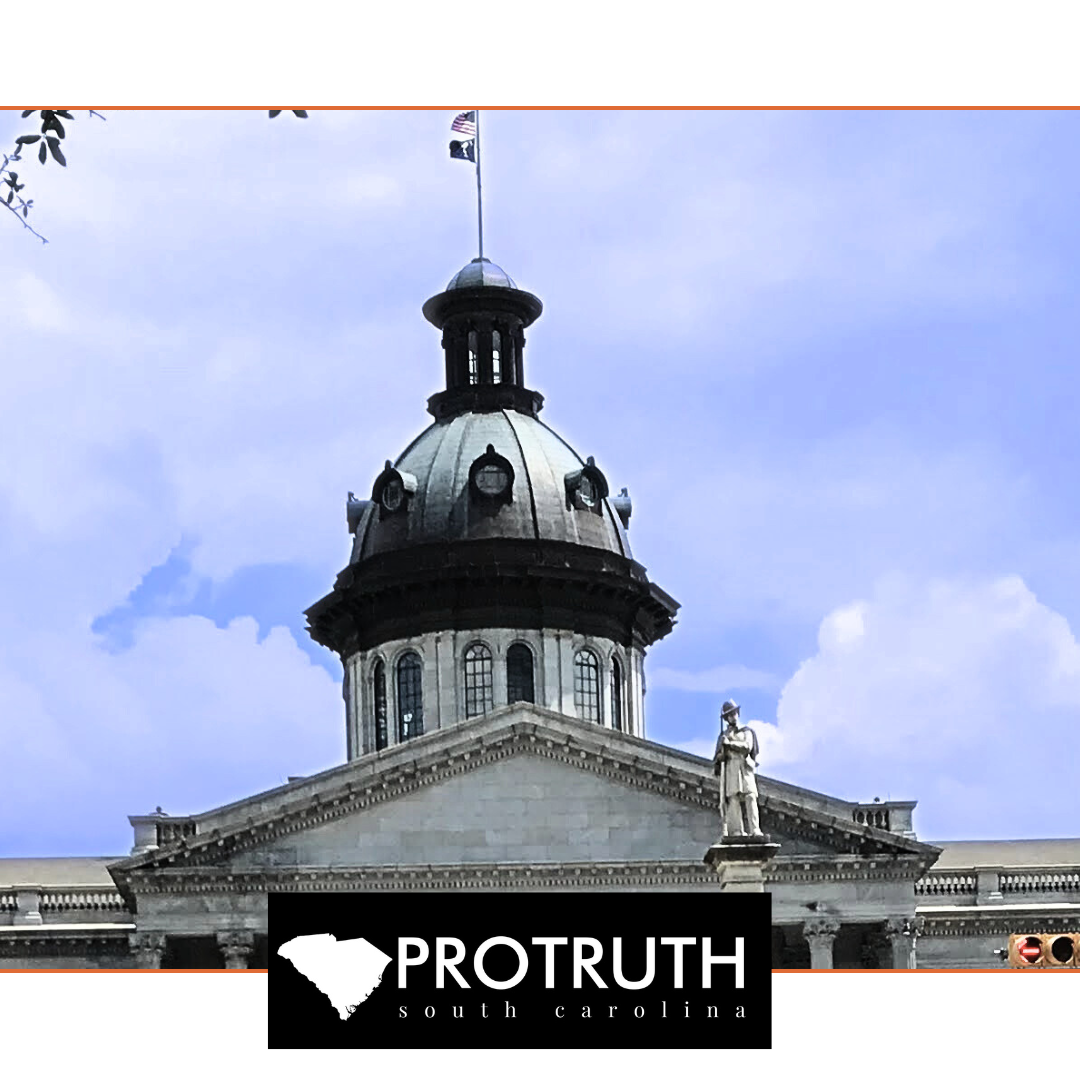
The SC Statehouse dome against a blue sky
By Steve Nuzum February 24, 2026
As South Carolina's current legislative session kicks into high gear, it is worth considering how legislators' current priorities compare to what they did, or tried to do, last year. As I write this, a Senate Education subcommittee has just fast-tracked two bills which would put the state in charge of determining which restrooms students use. As we have shared in the past (see our "Bathroom Bills" explainer under the Resources tab for more information), making transgender and gender-nonconforming individuals use bathrooms and changing rooms they don't feel comfortable using doesn't keep students safe, but it does real harm to our LGBTQ+ students, their families, and their communities. During their discussion today, senators indicated they planned to quickly take up House Bill 4756, which, like Senate Bill 199, is clearly targeted at restricting the rights of LGBTQ+ students. If the two versions of the bill are reconciled, the legislation has a much better chance of passing before the end of the session. Last year, the legislature fast-tracked a voucher bill into law. That bill, a response to the state Supreme Court overturning much of the previous voucher law, was met with widespread criticism. Opponents warned it would send money primarily to existing private school students, that it would result in taxpayer funds being spent in an opaque and unaccountable way, and that it would go to schools and programs which discriminate against students on the basis of religion and identity. Only halfway through the current session, all of those concerns have come to pass, with even Senate Majority Leader Shane Massey, a proponent of the bill, accusing the Department of Education of "a deliberate effort to circumvent the law," by encouraging families of homeschooled students to use the funds, leading to approximately 12% of the funds going to homeschool programs. The past year since implementation of the voucher law has seen cases of fraud and misuse of the funds by the Department , as well as private schools taking the funds while rejecting students on the basis of religion and LGBTQ+ status . And just as state officials focused on "parental rights" last year-- with Superintendent Ellen Weaver's book ban regulation leading to the most statewide bans of books from schools in the country-- this year has seen the introduction of similar state-level "parental rights" legislation that focuses heavily on creating legal "causes of action" for individual parents to sue schools and educators. This kind of legislation, and the rhetoric around it, does nothing to address most South Carolinian's concerns about how schools are funded and supported, but much to continue to demonize teachers, librarians, and LGBTQ+ students and families. With only a few months to go in this legislative session, it is more important than ever for citizens concerned about truth in education to reach out to elected representatives. Please urge them to focus on common-sense improvements to our state's school funding, rational approaches to addressing our ongoing teacher hiring and retention issues, and legislation which benefits ALL families and students in South Carolina, and not just the privileged few who can access school vouchers.
By Steve Nuzum January 3, 2026
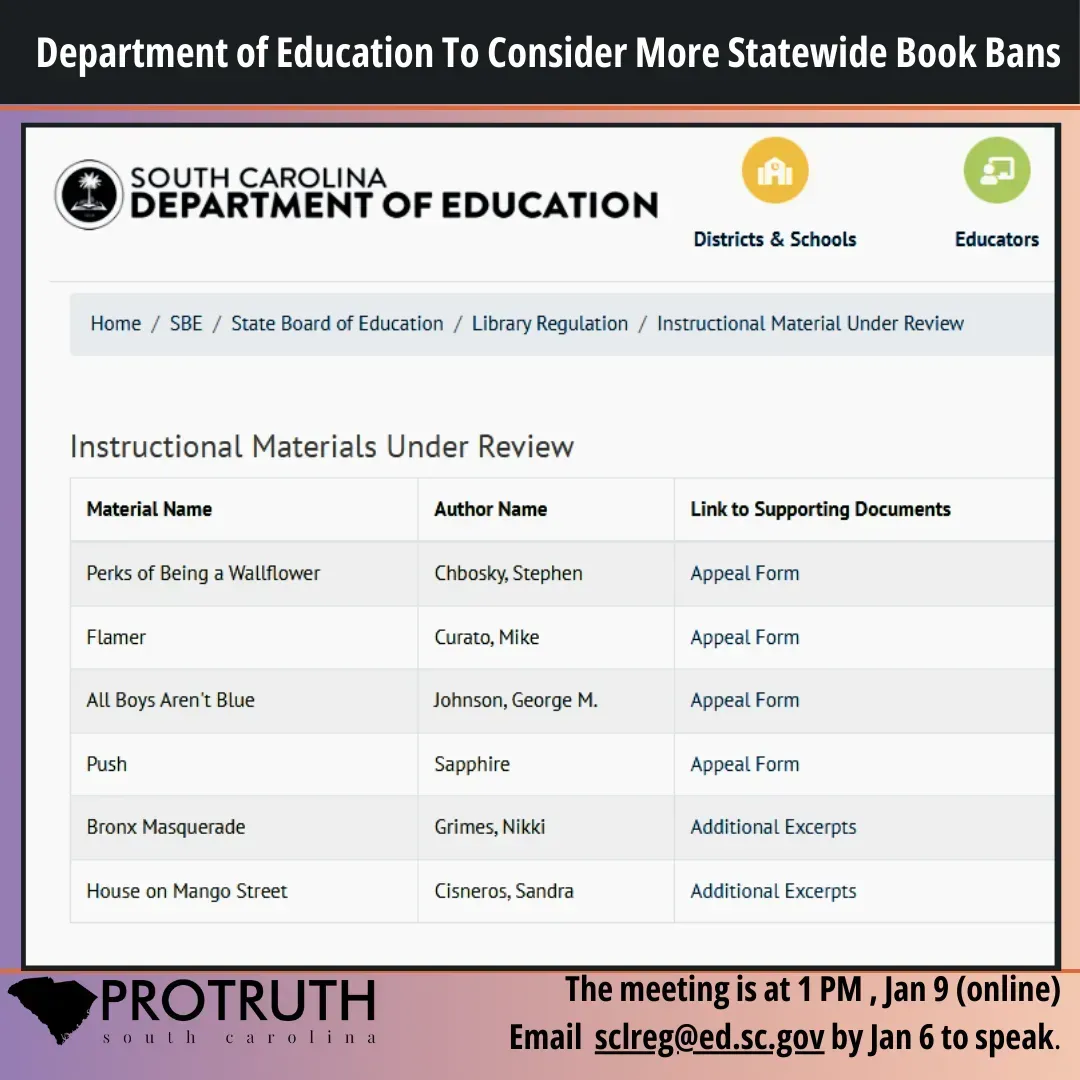
The books include Mike Curato's award-winning graphic novel Flamer .
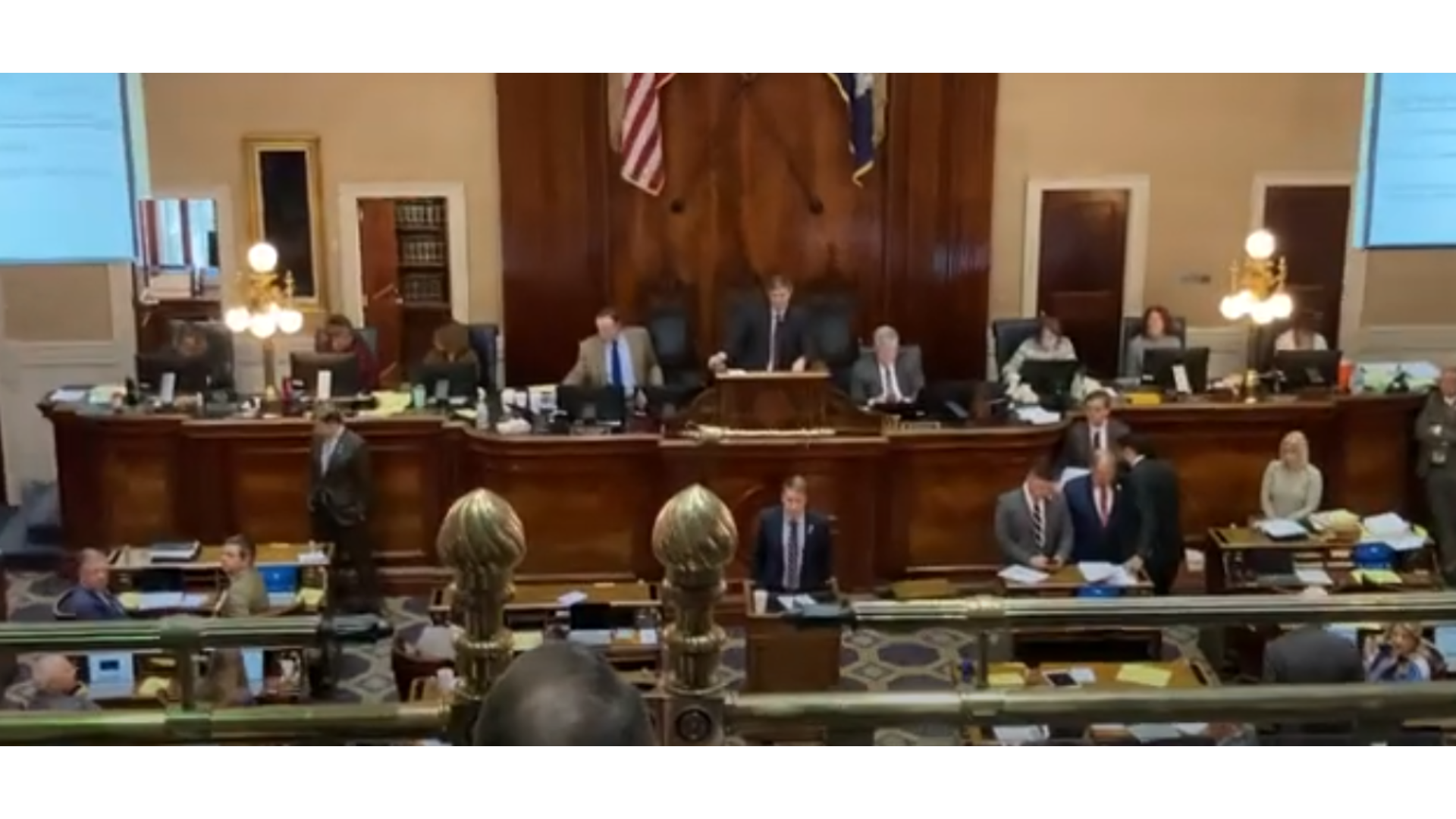
An overhead view of the SC House
By Steve Nuzum February 20, 2025
Quick summary: The House Education and Public Works Committee met yesterday to discuss the neo-voucher bill S. 62. The bill was amended to remove the Senate language using state Education Lottery funds to regular general funds (from tax revenue) and to add a trustee appointed by the Superintendent of Education to oversee the funds. Other amendments to add reporting requirements, cap enrollment, and require a pilot study were tabled or withdrawn. The bill was passed, as amended, to second reading. Discussion about education dominated the South Carolina House yesterday. In the morning, a bill which seemed headed for easy passage became bogged down in debate and recriminations between factions within the House. The SC House Freedom Caucus opposed language in the bill which would have required the state Department of Education to create a model online safety curriculum for students. Rep. Jordan Pace (Berkeley), current chair of the Freedom Caucus, objected at length to the language , on the basis that it would be implemented by librarians, who he said were likely to “indoctrinate” students because, he claimed, librarian education programs in the state were accredited by the American Library Association. He provided no evidence for this claim, which repeats common anti-public school talking points, under questioning by another House member. At another point in the meeting, Pace said, "The most recent South Carolina Librarian president [note: he seems to be referencing the South Carolina Association of School Librarians] was my journalism teacher in high school, and I’m very glad that her indoctrination didn’t stick, in my case." Pace’s former yearbook teacher is a former president of the Association; she has stated publicly that Pace merely took pictures for the yearbook. He did not provide any evidence or examples of how his teacher had “indoctrinated him”. This line of attack, of course, is reminiscent of a growing number of smear campaigns and threats against educators over the past several years; the librarian in question has been targeted publicly by South Carolina legislators many times. Rep. April Cromer (Anderson) introduced an amendment which would remove school psychologists from involvement with the model policy, claiming without evidence that the American Psychological Association would prevent school psychologists from participating without undue ideological bias. Pace also repeatedly alluded to a conspiracy theory called Cultural Marxism, by connecting state librarians and library associations to “German socialists” from the post-World War II era. Former Freedom Caucus Chair Adam Morgan is also a proponent of the conspiracy theory. Meeting on the neo-voucher bill When the House Education and Public Works meeting on S.62 finally began, the committee first introduced two committee amendments, representing a major change to the Senate version of the neo-voucher bill. The House version would no longer use State Education Lottery funds; instead general funds from tax revenue would be overseen by a “trustee” who has to be a financial expert and would be appointed by the superintendent. (The amendments are not publicly available, and there was confusion among committee members as to what the “trustee” would specifically do.) Under questioning from committee members, Erickson at one point acknowledged that a trustee could, for example, be an employee of a state charter authorizer. Most state charter schools are currently authorized by either the state or by private religious colleges like Erskine. Erickson has had a long relationship with Erskine Charter authorizer Cameron Runyan. The Erskine charter authorizer and other private charter authorizers in SC have come under significant scrutiny by lawmakers and the public for alleged mismanagement of charter schools and misuse of funds. Erskin and Runyan have even been accused of “criminal conspiracy” in a court filing by former associate James Runyean, who runs a rival private charter school. (Public filings show Runyan has donated to Erickson’s campaigns in the past.) The committee then called several witnesses. A representative from the South Carolina Department of Education spoke at length in favor of “educational freedom”. During her testimony, Rep. Jeff Bradley (Beaufort), who ultimately voted in favor of the bill, pointed out that if the maximum number of students apply, the total cost would be up to $60 million in the first year. Rep. Michael Rivers (Beaufort and Colleton) asked the Department spokesperson if the goal of the Department of Education is to educate children, or parents. The spokesperson said the goal is to educate the children. Rivers asked how that mission could align with creating “educational freedom” for parents. Another speaker invited by the committee to speak in favor of S.62, said he believed the legislature will make vouchers “universal” within a few years. Universal school choice has cost many states billions. And indeed the House amendment to the bill would make the neo-voucher program universal after the first three years. (There would be “no hard cap” on the number of students who could enroll, in the words of Pierce McNair, the committee’s director of research.) Public testimony Interestingly, the first several speakers during public testimony were strong supporters of what they called private school choice, who opposed S.62. One speaker who often speaks in favor of school book restrictions at State Board of Education meetings objected to the bill on the grounds that what she called the “subsidies” would create more “government dependence.” Another speaker pointed out that private education scholarships already exist, and that bringing in government money to private programs would inevitably “erode the independence” of private schools. The speaker, who said she was a homeschool parent, maintained that “taking the money and giving it to a trustee is unconstitutional”. At least two speakers objected to the bill on the grounds that they believed there was a plot by the United Nations to use neo-voucher programs to insert government into private education. This kind of rhetoric seems unsurprising given that the pro-voucher lobby has frequently made distrust of the government a central feature of its argument, and echoes Rep. Pace’s comments earlier in the day about teachers indoctrinating students at the behest of the ALA. As Chris Rufo famously stated, “To get to universal school choice, you really need to operate from the premise of universal school distrust.” Similarly, SC’s pro-voucher Palmetto Promise Institute released a “dossier” (entitled “Education or Indoctrination”) claiming educator associations were part of a “constellation of the left”. The editor of that “dossier,” Oran Smith , was present during meeting on S. 62, wearing a sticker supporting “school choice.”, was present during meeting on S. 62, wearing a sticker supporting “school choice.” Public and private school educators also spoke out against the bill, arguing it would harm public schools while doing little to help the average student not currently attending a private school to afford tuition. While committee members pushed back forcefully on this latter argument, even the head of the South Carolina Independent Schools Association, who spoke last, acknowledged that the average tuition in his network was greater than the $6,000 subsidy amount, and that, for example, tuition at Hammond School in Columbia is around $22,000 a year. (According to Private School Review, the average tuition for private schools in SC is $8,286 per year.) A contentious public comment period Rep. Shannon Erickson (Beaufort), committee chair, had to stop the proceedings about halfway through to remind representatives not to be combative with speakers. In particular, Rep. Bradley and Rep. Teeple (Charleston and Colleton) repeatedly asked speakers aggressive, sometimes leading questions about the bill. Teeple, for example, zeroed in on one speaker who had testified against the bill, asking repeatedly if she thought “competition” was helpful in improving schools— a question based on the premise that our schools are “failing” due to their own actions, and not those of the state. When she respectfully rejected the premise that public services should engage in the same kind of competition as private businesses, he continued to push back until Erickson excused the witness and reminded committee members that public testimony was “not a debate”. Dr. Janelle Rivers, speaking for the SC League of Women Voters, urged the committee to wait to see the effects of current vouchers before expanding them. Teeple repeatedly demanded statistics on which states— other than Arizona, which Dr. Rivers had already cited. The ACLU’s Paul Bowers and others later provided specific data about Florida and other states which have seen ballooning budgets since adopting “universal vouchers,” but Teeple asked them no follow-up questions. Bowers also warned about the existing research showing negative outcomes for students. Rep. Bradley at one point aggressively asked a speaker why the state should continue to spend “billions” on education. Again, his question was based on a premise that was never explained. (For example, the fact that by his own observation the bill would require up to $60 million to partly subsidize the educations of just 10,000 students, while the public school system serves nearly eighty times that amount, could provide part of the answer.) More importantly, though, the SC Constitution specifically requires that the General Assembly create a system of free public schools: “The General Assembly shall provide for the maintenance and support of a system of free public schools open to all children in the State and shall, establish, organize, and support such other public institutions of learning, as may be desirable”. This mandate doesn’t allow for the kind of defeatism multiple voucher proponents on the committee showed; it requires that if there truly are “failures” in the system, it is those very legislatures who must address and rectify them. Ultimately, though, the committee instead passed the bill as amended on to second reading. It will likely be on the full House floor by next week.
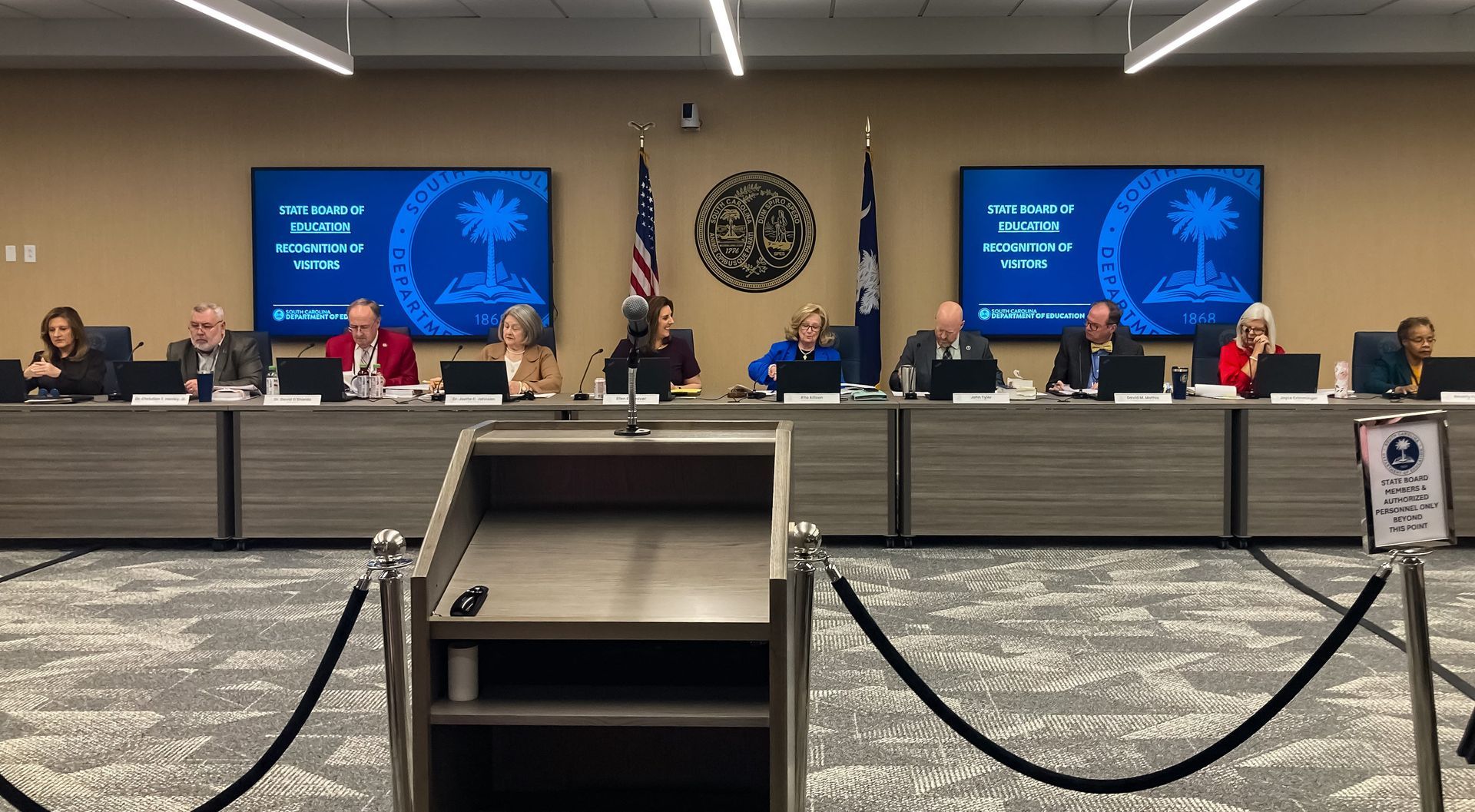
Image of the SC Board of Education
By Steve Nuzum February 4, 2025
The room was relatively packed today at the South Carolina State Board of Education’s monthly full board meeting. Because over ten people had signed up to speak, Chair Rita Allison moved to limit the normal five-minute public comment allotment to two minutes per person. The members of the South Carolina State Board of Education, along with Superintendent of Education Ellen Weaver (center), February 4, 2025 Full Board meeting. Testimony was weighted heavily in favor of retaining some or all of the books challenged. The majority of speakers were passionately opposed to the removal of the four books on the chopping block: Mike Curato’s Flamer , George M. Johnson’s All Boys Aren’t Blue , Stephen Chbosky’s The Perks of Being a Wallflower , and Push , by Sapphire. A student from a local high school argued that All Boys Aren’t Blue represented the lived experiences of many queer students, students of color, and victims of sexual assault, saying author George M. Johnson had written the book in the hopes that queer young people could recognize and therefore escape sexual assault. Appleseed Justice Center Education Policy Attorney Jennifer Rainville argued that the book Flamer did not violate the regulation used to remove books in South Carolina, based on the standard created by the Board, itself, when it opted not to ban the novel 1984 . Jessicka Spearman, a counselor who works with victims of sexual trauma, told the Board that trauma victims needed to feel seen, and that removing books like the ones challenged today would make that more difficult. Mary Foster, of Beaufort’s Families Against Book Bans (FABB), pointed out that the books had been vetted already, using a “democratic process,” when the complainant challenged them, along with over ninety other books. Now, Foster said, one person was being allowed to override the work that a team of teachers, parents, and librarians had already completed. T he Board voted to ban the books. All four books were ultimately banned, but whereas in previous meetings the full Board has simply voted to accept the recommendations of the Instructional Materials Review Committee, this time there was some dissension in the ranks. Board member and former Chair David O’Shields, a current district superintendent, voted against removing every challenged book except Push, while Board member Beverly Frierson, a retired educator, voted against all of the removals.  At least one other member, who is not on the Review Committee, objected to the process in general, saying he had received many emails complaining about the removals, and saying people don’t want to be told what to do (presumably when it comes to selecting books and/ or choosing books for their children).
By Steve Nuzum January 9, 2025
Four more books are recommended for removal from all schools in South Carolina, including The Perks of Being a Wallflower and All Boys Aren't Blue.